
This page collects some examples of my professional writing work from over the years.
Community Management
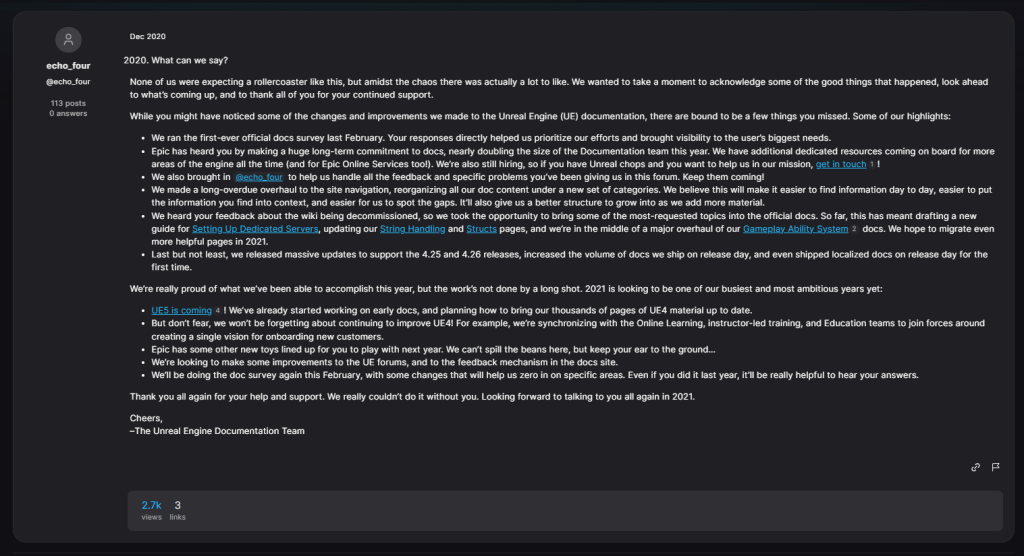
My main experience with community management comes from my time at Epic Games as a technical writing contractor (APR 2020 – FEB 2021). While there, I managed feedback that users submitted via the Unreal Engine (UE) documentation forums.
Here’s a link to my UE forums account activity. From there you can explore examples of me interacting with UE users.
Here’s an example (link) of an end-of-year recap post that I wrote. (Link pulled and working as of 9/16/2025.)
Articles
I’m using “article” as sort of an umbrella term to refer to single-page pieces of content. These can range from how-to articles (which outline how to accomplish a specific goal), reference pages (which provide tables or lists your audience can use to research or confirm information), and more.
I’d say that writing articles is one of the things I’ve done the most in my writing career. From writing internal process documentation for ZeniMax Online Studios ( Feb. 2022- Sept. 2025), to writing detailed how-to documentation for Litify (Feb. 2021 – Feb. 2022), to writing customer support documentation for Apex Legends while I was at Electronic Arts (Dec. 2015 – Aug. 2018). Writing content of this sort is what I’d say I’m best at and most comfortable doing.
(I’m currently working to gather some articles that would be appropriate to share here as examples. If you’d like to know more about the types of articles I’ve written in the past please don’t hesitate to contact me.)
Guides
Guides allow you to group several pieces of documentation to provide a comprehensive look into a topic. Some common examples include:
- Quick-Start Guide (QSG): An often broad but shallow exploration of a topic designed to get your audience acclimated, and using, something as quickly as possible.
- Advanced User Guide: A more comprehensive exploration of a topic. These guides usually forgo the niceties of introductory documents in favor of being packed with “crunchy” information intended for super users.
- Troubleshooting Guide: Troubleshooting guides, as the name hints at, are intended to help users investigate, resolve, circumvent, and/or report a common issue.
- Style Guides: Lists rules and best practices which help provide clarity and ensure consistency. (Like the Microsoft Writing Style Guide.)
I see guides as an extension of individual articles, as they’re collecting individual pages and repackaging them for a specific purpose. Writing guides is something that I’ve done often, and again is something I’m very comfortable doing.
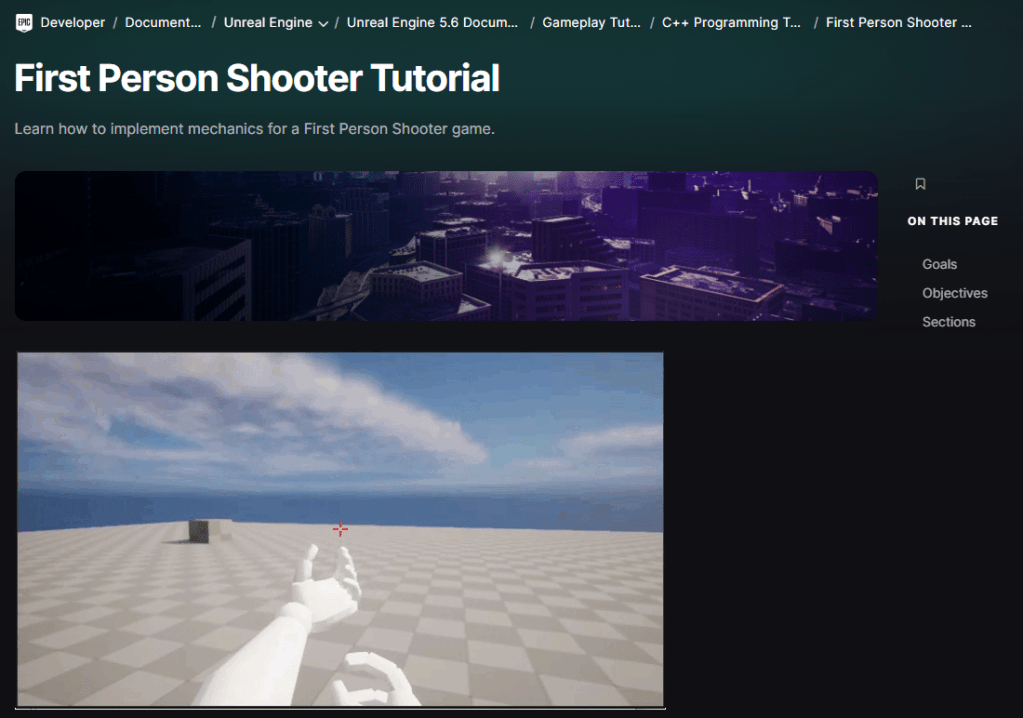
Here’s an example (link) of a four-part guide I wrote to help UE users start their own first-person shooter project . (Link pulled and working as of 9/16/2025.)
Here’s an example style guide I’ve written for documentation. (Link to guide on my personal Confluence space—please let me know if it doesn’t work. PDF copy below)
Visualization
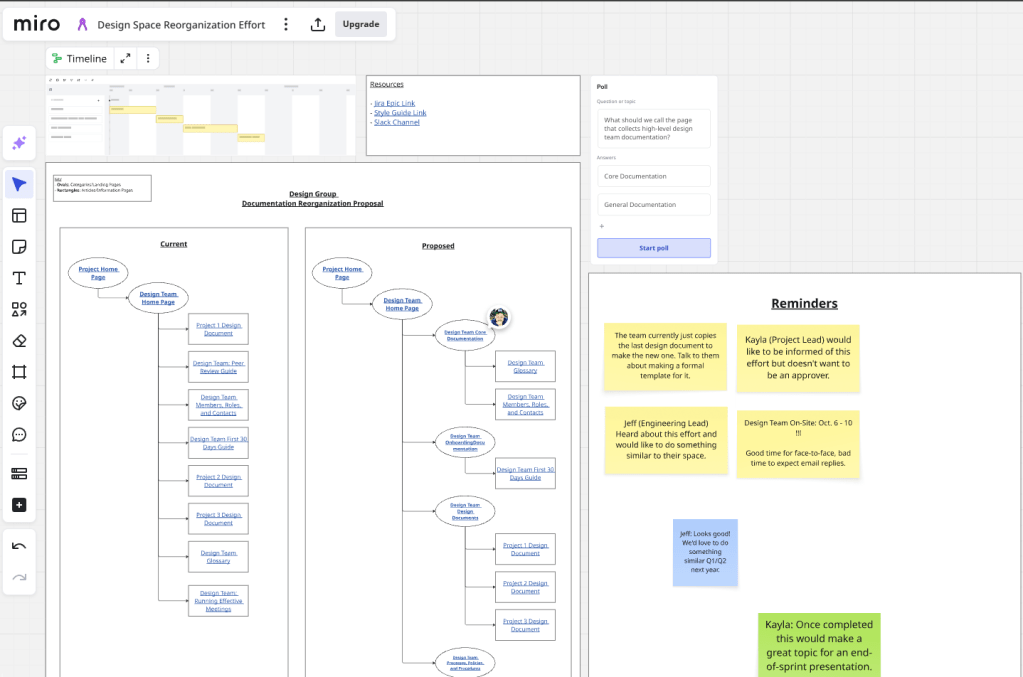
A lot of writing is, well, not writing. It’s planning and collaborating to make sure you have what you need and that expectations are being met. For me, I’ve found visualization tools like Miro and Lucid Chart to be invaluable in content organization.
I’ve found that a lot of people are visual learners. As such, sharing a visual outline can often help a lot more than sharing a bulleted document or trying to explain plans over a call. Using visual tools like this is something I find myself doing more frequently as time goes on. However, it also depends on the scope of the project and body of work I’m helping with—for smaller projects it might be overkill.
Here’s an example of a board I might create to help a team plan reorganizing their documentation. (Public Miro board link.)
What to chat? I’d love to! Please reach out via LinkedIn, my contact form, or directly via email (mwatso88@gmail.com).
 Matt Watson's Content Portfolio